Description and Abstract:
Statistical Analysis and Genomic Assessment
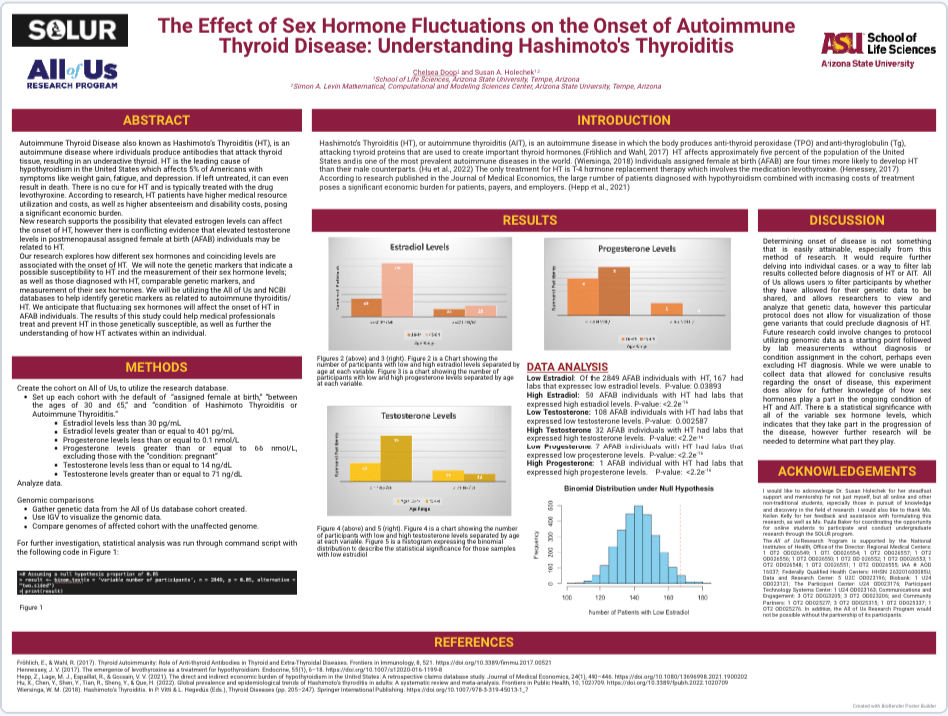
Autoimmune Thyroid Disease, also known as Hashimoto’s Thyroiditis (HT), is an autoimmune disease where individuals produce antibodies that attack thyroid tissue, resulting in an underactive thyroid. HT is the leading cause of hypothyroidism in the United States which affects 5% of Americans with symptoms like weight gain, fatigue, and depression. If left untreated, it can even result in death. There is no cure for HT and is typically treated with the drug levothyroxine. According to research, HT patients have higher medical resource utilization and costs, as well as higher absenteeism and disability costs, posing a significant economic burden.
New research supports the possibility that elevated estrogen levels can affect the onset of HT, however there is conflicting evidence that elevated testosterone levels in postmenopausal assigned female at birth (AFAB) individuals may be related to HT.
Our research explores how different sex hormones and coinciding levels are associated with the onset of HT. We will note the genetic markers that indicate a possible susceptibility to HT and the measurement of their sex hormone levels; as well as those diagnosed with HT, comparable genetic markers, and measurement of their sex hormones. We will be utilizing the All of Us and NCBI databases to help identify genetic markers as related to autoimmune thyroiditis/HT. We anticipate that fluctuating sex hormones will affect the onset of HT in AFAB individuals. The results of this study could help medical professionals treat and prevent HT in those genetically susceptible, as well as further the understanding of how HT activates within an individual.
Primary Author:
Chelsea Doop
Completion:
In progress
Presented at:
BioSci Symposium October 2023
 Chelsea Doop